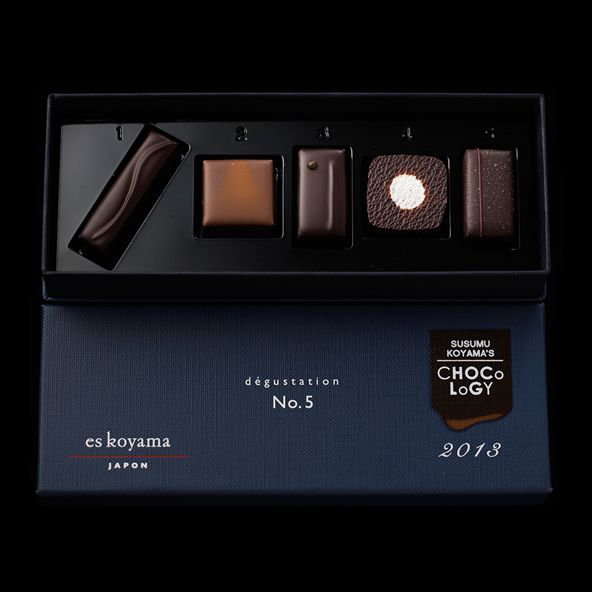
SUSUMU KOYAMA'S CHOCOLOGY 2013
Chef Koyama Proudly Announces
His Inclusion in C.C.C.,
France's Most Authoritative Chocolate Guidebook
Le Guide du Club des Croqueurs de Chcolat is an association that was formed by a group of French chocolate lovers (gourmet food journalists, Sonia Rykiel, and the president of the Taillevent company among them). Every October the association presents a list of chocolate makers with a special award, and publishes a guidebook, ranking the best 100 French and foreign chocolatiers based on taste, artistry, and other aspects using a five-level system. Visitors to the Salon du Chocolat 2013 will have a special chance to watch the renowned award ceremony, and to sample some of the winning chocolate.
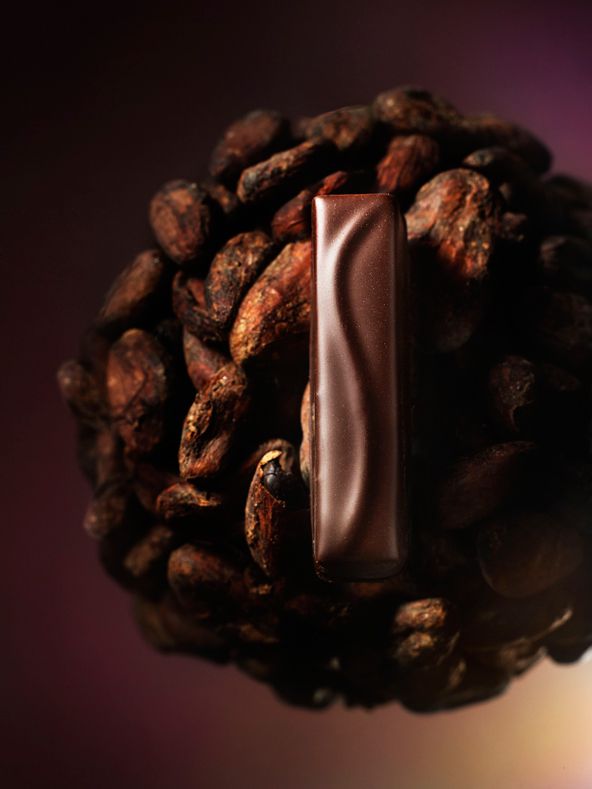
R.2013
This dark chocolate employs 63 percent cacao, a mix of Trinitario and Criollo beans from the Centro Selva region of the Peruvian Amazon. The couverture evokes dried plums and prune compote, and the aroma is nicely tart with a hint of caramel. The pleasantly refreshing flavor is light and doesn't linger afterward. The R in the name "R.2013" stands for the French words "rencontre" (encounter) and "resolution" (resolution), and the S-curve embellishing the coating represents the course of the Amazon River.
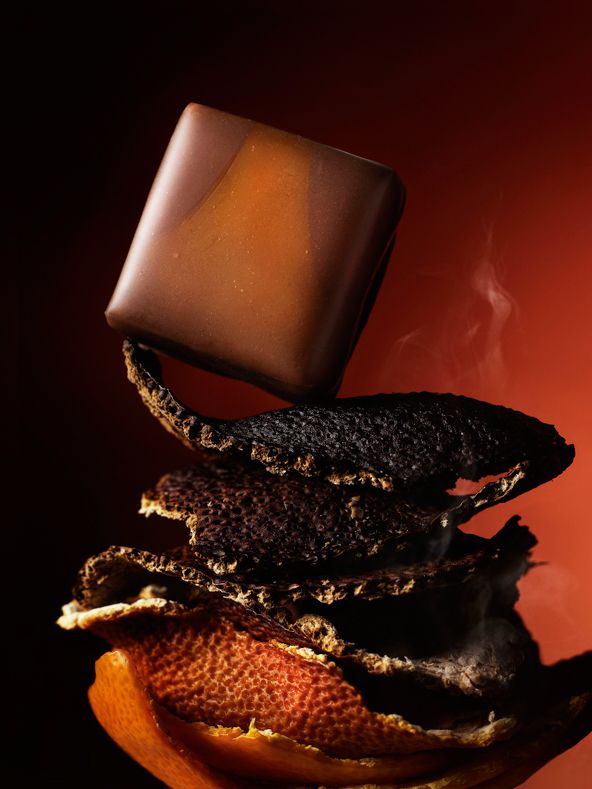
Yaki-Mikan
An oil known as limonene is released when the peel of a mikan (Japanese mandarin orange) is burned. This substance generates a fabulous fragrance and delectable tartness one could hardly imagine coming from its singed black surface. Burning the peel not only produces this fragrance but also causes carbonization, but it's essential to burn it completely black to get the distinctive fragrance and tartness: only incineration fully brings out the wealth of oils contained in mikan peel. This 40 percent cacao milk chocolate marries these flavors to a milky sweetness for an unprecedented taste encounter. Keemun Earl Grey tea leaves add a subtle accent, with natural bergamot highlighting the unique fragrance of singed mikan, a surprisingly superb companion to chocolate.
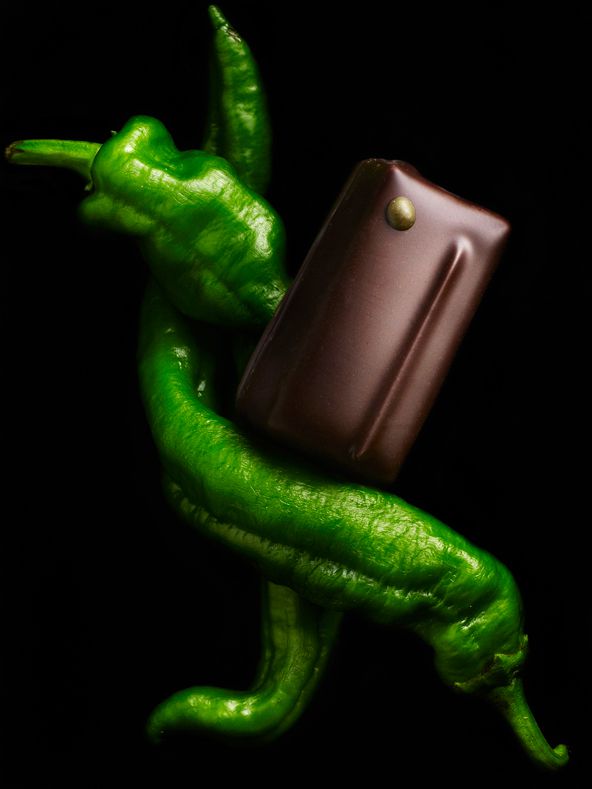
P.C.J.
: Praline comme Cuisine Japonaise
A combination of freeze-dried Manganji peppers in soy sauce and almond pralines spectacularly conjures up the flavors of Japanese cuisine. Chef Koyama pairs milk chocolate, often used in pralines, with a slender green vegetable known as the Manganji pepper, a familiar Kyoto specialty he grew up with. To draw out the abundant flavor of the peppers to the fullest, the chef selected a 55 percent cacao dark chocolate for sharpness. Pralines are distinctive in that they contain no moisture, and are perfectly suited for a blend of chocolate, nuts, and a third key ingredient, which he achieved through the process of freeze-drying. Even a little moisture will cause freeze-dried foodstuffs to begin reverting to their previous state, but the waterless climate of a praline is ideal for the uniquely crunchy texture only freeze-dried foods create, and the flavors stay crisply distinct from the ganache. Place one in your mouth and it melts, and the vivid taste of Manganji peppers in soy sauce appears, whisking you away to the realm of genuine Japanese cuisine.
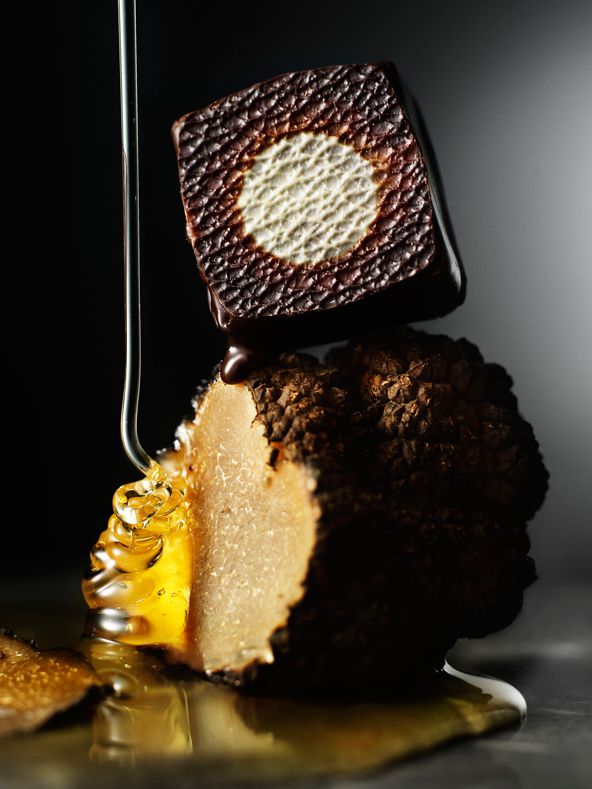
Miel à la Truffe Blanche
An encounter with truffle honey on a recent research trip to Italy inspired Chef Koyama to create this rendezvous between cacao, truffles, and honey. The 70 percent cacao couverture made with Forastero beans from Ecuador has a mellow natural aroma evoking the bountiful trees, flowers and vegetation of the rainforest, which blends marvelously with honey from wildflower meadow highlands at 1,500-meter elevation, infused with Italian white truffles. To appropriate the language of perfume, the generous aromatic bouquet of truffles forms the top notes, which give way to the middle notes, the ambrosial scent of honey. After this dissipates, truffles reappear for the lingering base notes, which resonate on the palate. A sumptuous symphony in three parts is sure to surprise and delight.
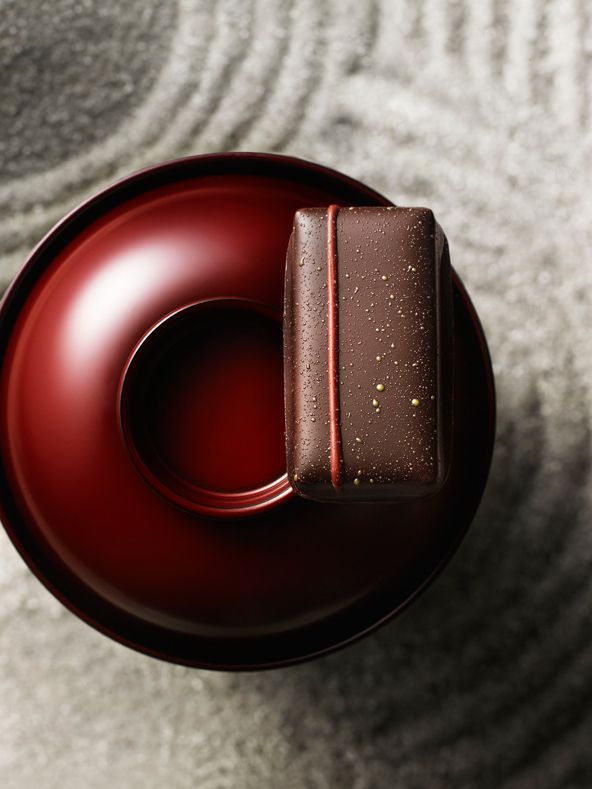
Zen 禅 Dernière influence
At Chef Koyama's favorite sushi restaurant, red miso soup garnished with sansho, a pepper-like Japanese spice, is offered last to top off the meal. Inspired by this dish, he sought to fuse chocolate with the vivid citrus flavor of berry-like budo sansho spice in a creation of bold originality. Instead of grinding the spice, he infused fresh cream with whole berries. A ganache (chocolate-cream icing) features dark chocolate made with 70 percent Trinitario cacao from Papua New Guinea. Cacao grown in the volcanic soil of Papua New Guinea is difficult to dry naturally, and at the end of the process it is often dried with a wood fire rather than electric or gas heat, giving it a tantalizingly pungent aroma reminiscent of cut grass or leather. The seemingly unlikely marriage of sansho's delicately refreshing citrus tang and Papuan cacao's earthy allure is a captivating chemical reaction. A red-miso chocolate icing contains milk chocolate with 38 percent Costa Rican Trinitario cacao, an ideal match for fermented soy products, and a 55 percent cacao dark chocolate that accentuates the savory miso. A scintillating blend of sansho's singularly spicy tang, red miso's zest, and chocolate makes the ideal treat to top off Chef Koyama's chocolate collection for 2013.